



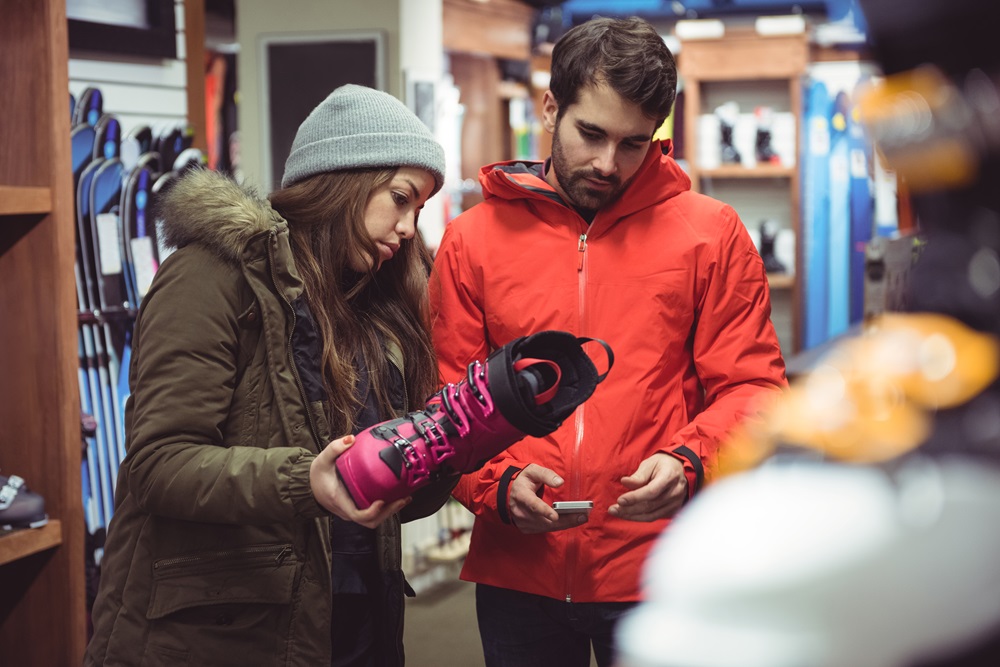
When you decide to buy skis and boots online, you face a real problem: fit matters more than anything else in skiing, but you can’t try boots on in person.
You have two main options now—virtual fitting tools that use your phone or measurements, and remote consultations with actual boot fitters.
Both claim they’ll get you the right fit. But which one should you trust with something as important as ski boots?
What Are Virtual Fitting Tools Actually Doing?
Virtual fitting tools use technology to measure your feet and match you with boots. Most work through your smartphone camera or require you to trace your feet on paper and upload photos. Some use 3D scanning if you have access to that technology.
The tools measure length, width, arch height, and sometimes volume. They compare your measurements against manufacturer databases to suggest boots that should fit your foot shape.
More advanced versions use AI to analyze your foot structure and predict which boots will work.
These tools are getting better fast. A few years ago, they were pretty basic—mostly just length and width.
Now some can detect pressure points, analyze your arch type, and even account for things like bunions or toe alignment. But they’re still limited by the quality of data you provide.
How Does Working With a Remote Boot Fitter Work?
A remote boot fitter is an actual person—usually someone with years of experience fitting boots in shops—who works with you through video calls, photos, and detailed questionnaires.
You send them measurements, photos of your feet from multiple angles, and information about your skiing ability and any foot issues.
The fitter uses their experience to interpret what they see. They’ll ask about your previous boots, where you felt pressure, whether your feet go numb, how your boots performed in different conditions. They’re looking at the whole picture, not just measurements.
After analyzing everything, they recommend specific boots and sometimes suggest modifications you’ll need. Many remote fitters will also guide you through heat molding at home or recommend local shops for any necessary adjustments.
When Virtual Fitting Tools Make Sense for You?
Virtual tools work well in specific situations. If you have fairly standard feet—no major issues like severe pronation, wide forefeet with narrow heels, or previous injuries—these tools can get you close enough. They’re also good if you’re replacing boots that fit well and just want to find a similar model.
Cost is another factor. Virtual tools are usually free or cheap. Some retailers include them as part of the shopping experience. If budget is tight and you’re confident your feet are normal-shaped, this might be your route.
They’re also convenient. You can do it at midnight in your living room. No scheduling calls, no back-and-forth emails. Input your data, get recommendations, order boots. For intermediate skiers with average feet, this convenience plus decent accuracy makes sense.
New skiers sometimes do fine with virtual tools too. If you’re just starting out and not pushing boots hard, a reasonably close fit will work while you’re learning basics. You can always upgrade to a more precise fit later as your skiing improves.
When You Need a Real Remote Boot Fitter Instead?
If your feet have any quirks, you need a real fitter. High arches, flat feet, bunions, Morton’s toe, previous foot surgeries—these issues mean measurements alone won’t cut it.
A fitter can interpret how these factors affect boot choice and what modifications you’ll need.
Advanced skiers should skip the virtual tools. When you’re skiing aggressive terrain or racing, boot fit becomes critical to performance. Small pressure points that wouldn’t bother a casual skier will limit your ability when you’re skiing hard. A fitter understands these nuances.
If you’ve struggled with boot fit before, don’t trust an algorithm. You’ve probably tried multiple boots, dealt with pain, maybe given up on full days because your feet hurt.
This history matters. A fitter will dig into what went wrong and why, then find solutions based on patterns they’ve seen hundreds of times.
The table below breaks down when each approach works:
| Your Situation | Virtual Tool | Remote Fitter |
| Normal-shaped feet, no pain history | Good option | Probably overkill |
| Previous boot fit problems | Not recommended | Necessary |
| Advanced/expert skier | Risky | Recommended |
| Foot abnormalities (bunions, high arches, etc.) | Insufficient | Required |
| Budget under $50 for fitting help | Only option | Not feasible |
| First-time boot buyer, beginner skier | Acceptable | Better but not essential |
What About the Accuracy Rates Between the Two?
Here’s where things get interesting. Virtual tools claim accuracy rates of 80-90%, but that’s measuring whether the boot was “acceptable,” not whether it was perfect. Acceptable and optimal are different things.
Remote fitters don’t publish accuracy statistics the same way, but customer satisfaction rates for established fitters run around 85-95% when measuring if customers kept and used the boots without issues.
The key difference is that fitters can course-correct. If the first recommendation isn’t quite right, they can adjust.
Virtual tools give you a recommendation and that’s it. If the boots don’t fit, you’re starting over.
With a fitter, you have someone invested in solving the problem. They’ll troubleshoot with you, suggest heat molding techniques, recommend insoles, or find a different boot entirely.
How Much Does Each Option Actually Cost?
Virtual fitting tools are mostly free. Retailers offer them hoping you’ll buy from them. Some standalone apps charge $10-30 for detailed analysis, but most skiers use free versions.
Remote boot fitting consultations range from $50 to $200 depending on the fitter’s experience and how in-depth the service is. Some fitters credit this fee toward your boot purchase if you buy through them. Others charge separately regardless of where you buy.
You need to factor in potential return costs too. If virtual tools get it wrong and you need to return boots, you’re paying shipping both ways—often $30-60 total. If that happens twice, you’ve spent what a fitter would have cost and you still don’t have the right boots.
Can You Combine Both Approaches?
Yes, and sometimes this makes sense. Use a virtual tool to narrow down options and understand your basic measurements. Then consult with a remote fitter about the top two or three options the tool suggested. The fitter can evaluate whether those choices make sense for your specific situation.
This hybrid approach costs less than a full fitting consultation while still getting expert input on the final decision. You’ve done the preliminary work, so the fitter can focus on the nuanced decisions that algorithms can’t handle well.
What Information Do You Need Ready Either Way?
Both methods need accurate foot measurements. You’ll measure length, width at the ball of your foot, and often arch height. Follow the instructions exactly—measurements off by even 5mm can lead to wrong recommendations.
You should know your skiing ability honestly. Don’t say you’re an expert if you ski groomed runs twice a year. Your actual skiing level affects boot flex and design choices. Be realistic about where you are now, not where you hope to be.
Any foot issues or past boot problems matter. Write down specifics: where exactly did old boots hurt, when during the day, what kind of pain. “My feet hurt” doesn’t help. “My forefoot goes numb after an hour, mostly in my right foot” gives useful information.
How Do Returns Work When You Buy Skis and Boots Online?
This is critical because boot fit often requires trying them on and walking around, which technically “uses” them.
Different sellers have different policies. Some allow full returns even after indoor wear testing. Others don’t accept returns once you’ve walked in them beyond trying them on.
Read return policies before buying. Know how many days you have, whether you pay return shipping, and what condition boots need to be in.
This affects which fitting method you should trust—if returns are difficult or expensive, you want higher confidence in the initial choice.
What’s Your Backup Plan If the Fit Isn’t Right?
With virtual tools, your backup is returning and trying again. That works if the seller has good return policies. Otherwise you’re stuck with boots that don’t fit well, which is worse than no boots.
With remote fitters, your backup is usually working with that same fitter to solve the problem.
They might suggest modifications, different boots, or connect you with a local shop for hands-on adjustments. You have a relationship and ongoing support.
Some fitters offer fit guarantees—if their recommendations don’t work, they’ll keep helping until they do, sometimes even covering return shipping costs. Virtual tools can’t offer this because there’s no ongoing relationship.
The truth is that buying ski boots online without trying them on in person is always somewhat risky. Both virtual tools and remote fitters try to minimize that risk, but they do it differently.
Virtual tools are faster and cheaper but purely data-driven. Remote fitters cost more and take longer but bring human judgment and ongoing support.
Frequently Asked Questions
Are virtual fitting tools accurate enough when you buy skis and boots online?
Answer: Virtual fitting tools can work well for skiers with normal-shaped feet and no past boot issues, but they aim for an “acceptable” fit, not a perfect one.
When should I choose a remote boot fitter instead of a virtual tool?
Answer: If you have foot abnormalities, past boot fit problems, or you’re an advanced skier, a remote boot fitter is the safer choice because they consider your full history and can adjust recommendations.
How much does remote boot fitting cost compared to virtual tools?
Answer: Virtual tools are usually free or cost under $30, while remote boot fitting consultations typically range from $50–$200, sometimes credited toward a boot purchase.
Can I use both a virtual fitting tool and a remote boot fitter?
Answer: Yes. Many skiers use a virtual tool to narrow options, then consult a remote fitter to confirm the final choice and address fit nuances.
What’s the biggest risk when you buy skis and boots online?
Answer: The biggest risk is poor boot fit. If returns are difficult or expensive, relying only on a virtual tool can lead to wasted time and money compared to working with a fitter.


