

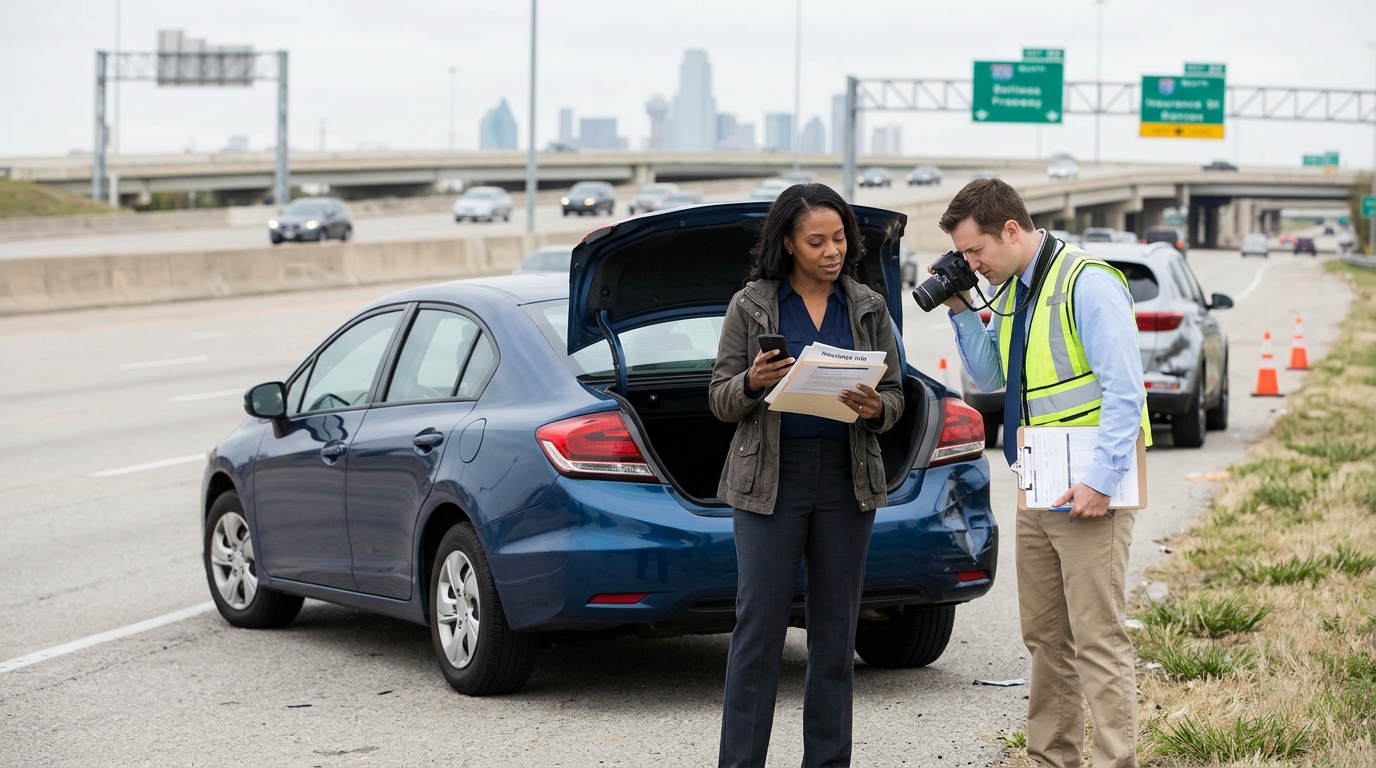
One minute you are driving across Dallas.
The next, you are sitting in a damaged car trying to figure out what just happened.
Your first thoughts probably are not about insurance claims or legal deadlines.
They are more likely to be:
Is everyone okay?
Do I need an ambulance?
Should I move my car?
What information do I need?
That is normal.
You do not need to understand the entire claims process while standing on the side of the road.
Handle it in stages.
Get safe.
Take care of injuries.
Preserve what you can.
Report the accident.
Then deal with the claim.
This guide walks through those steps, with a focus on what Dallas drivers can realistically do during the first few hours and days after a crash.
Quick Answer
After a Dallas car accident:
- Check for injuries and call 911 when necessary.
- Get yourself and your vehicle out of danger when it is safe to do so.
- Exchange driver and insurance information.
- Photograph the vehicles, roadway, signs, and surrounding conditions.
- Collect witness information.
- Write down what you remember while the details are fresh.
- Seek appropriate medical care for injuries or symptoms.
- Notify your insurance company.
- Keep medical, repair, wage-loss, and accident-related expense records.
- Consider legal guidance if the accident involves serious injuries, disputed fault, significant losses, or insurance problems.
The Texas Department of Insurance recommends photographing the accident scene and vehicles, collecting witness information, recording accident details, and notifying your insurance company as soon as possible.
The First 10 Minutes: Forget The Claim For A Moment
Immediately after a collision, focus on safety.
Check yourself.
Check other people if you can do so safely.
If someone appears seriously injured, call 911.
If the vehicles are creating a hazard and can safely be moved, getting out of an active traffic lane may reduce the chance of another collision.
Do not walk into traffic to get a photograph.
Do not put yourself at risk trying to retrieve a damaged item.
Your health and safety come before evidence.
Texas Law Requires Drivers To Stop After Certain Collisions
Texas Transportation Code §550.021 addresses collisions involving personal injury or death and requires the operator to stop, determine whether someone needs aid, and remain at the scene until the statutory requirements are satisfied.
Other sections of Chapter 550 address collisions involving property damage and the exchange of information.
The practical takeaway is simple:
Do not just drive away because the accident looks minor.
If you are unsure what you are legally required to do, prioritize safety and contact appropriate authorities.
When Should You Call 911?
There are situations where police and emergency medical assistance should be involved.
Texas Department of Insurance recommends calling police when:
- Someone is injured
- A driver leaves the scene
- Other circumstances require police assistance
TDI also advises calling police if the other driver refuses to provide insurance information.
If you suspect intoxication, a dangerous roadway situation, or another serious circumstance, contacting emergency services is appropriate.
What Information Should You Exchange?
Once the immediate danger is under control, exchange information.
Get:
- Full name
- Phone number
- Driver’s license information
- Insurance company
- Policy number
- License plate
- Vehicle information
A simple trick can save you time:
Photograph the insurance card and driver’s license instead of trying to copy everything by hand.
TDI specifically recommends photographing the other driver’s insurance information and license.
Give the other driver your information too.
Keep The Conversation At The Scene Simple
This is not the time to argue about who is at fault.
You may be certain the other driver caused the accident.
They may be equally certain you did.
Instead of debating it:
- Exchange information.
- Answer factual questions.
- Avoid guessing.
- Document the scene.
- Let the evidence speak for itself.
You do not need to make a legal argument on the shoulder of a Dallas road.
Take Photographs Before The Scene Changes
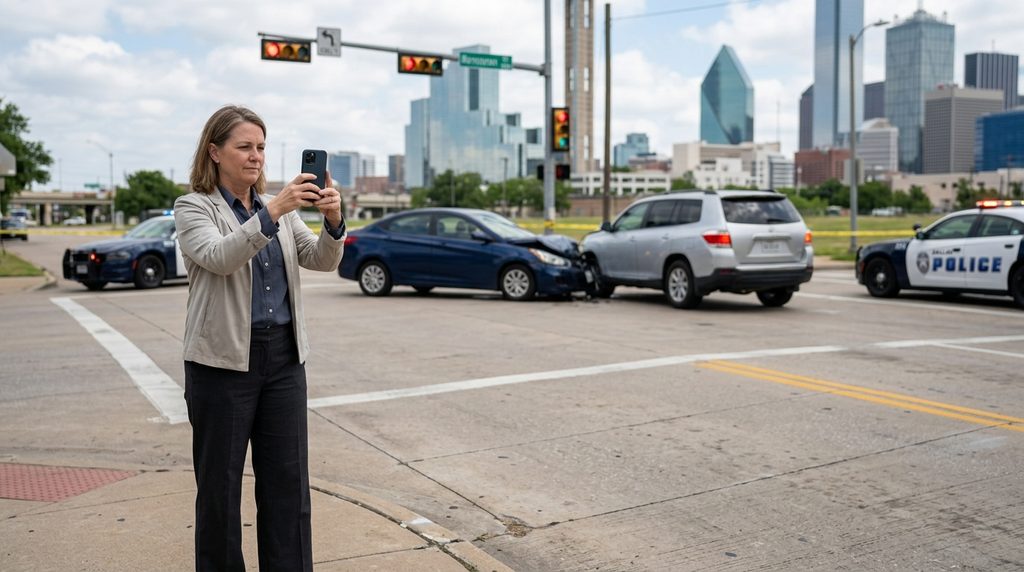
If you are safe enough to do so, take photographs.
Start with the obvious.
Your Vehicle
Photograph:
- Front damage
- Rear damage
- Side damage
- Broken lights
- Broken glass
- License plate
The Other Vehicle
Photograph:
- Damage
- License plate
- Vehicle position
- Relevant visible details
The Road
Photograph:
- Lane markings
- Traffic signs
- Traffic signals
- Road conditions
- Debris
- Intersection layout
TDI recommends taking photographs of the vehicles, street signs, road angles, and accident scene.
Take A Few Wide Photos Too
A close-up photograph shows damage.
A wide photograph shows context.
That distinction can matter.
Imagine an intersection where two vehicles collided.
A close-up of the bumper tells you very little about the intersection itself.
A wider photograph may show:
- The lanes
- The traffic signal
- Nearby signs
- Vehicle positions
- Visibility
You do not need hundreds of photographs.
Just enough to preserve what you saw.
Find Witnesses Before Everyone Leaves
If someone saw the accident, ask whether they are willing to provide contact information.
Record:
- Name
- Phone number
- Email address, if available
TDI notes that independent witnesses can help establish fault if drivers disagree about what happened.
Do not tell the witness what they should say.
Simply preserve their information.
Write Down What You Remember
Do this as soon as you reasonably can.
Write down:
- Date
- Time
- Location
- Direction of travel
- Weather
- Road conditions
- What you remember happening
- Where the vehicles were
- Names of witnesses
Your memory may be sharp immediately after the crash.
It may not be six months later.
TDI specifically recommends recording the accident’s time, date, location, weather, road conditions, and circumstances.
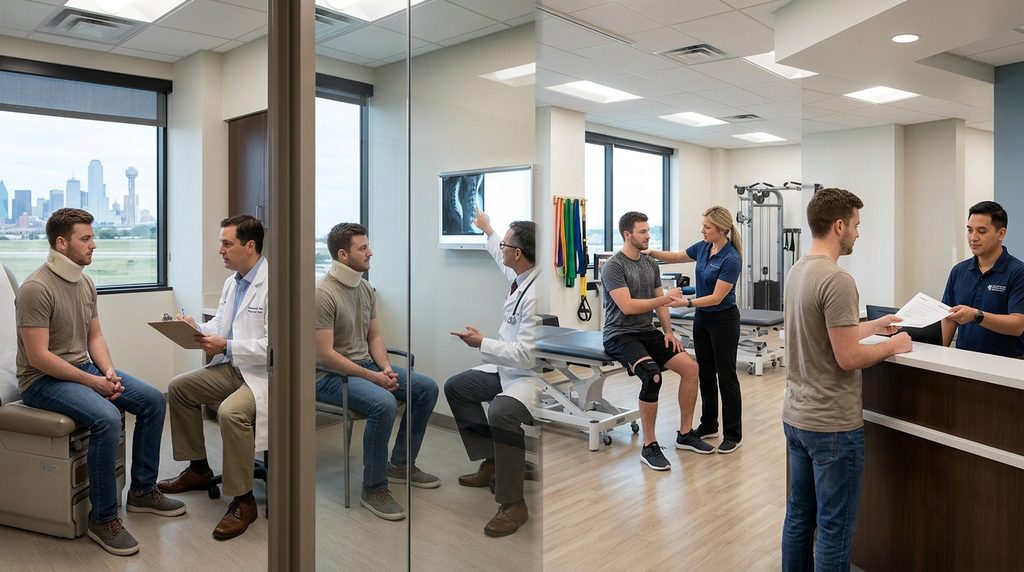
The First Few Hours: Take Care Of Your Health
After the adrenaline wears off, you may start noticing things you did not notice at the scene.
Maybe your neck hurts.
Your back feels stiff.
You develop a headache.
Your shoulder is sore.
You feel dizzy.
If you are injured or develop concerning symptoms, seek appropriate medical care.
Do not decide that an injury is insignificant simply because you were able to walk away from the crash.
Medical Records Create A Timeline
If you receive treatment, keep the records.
A useful timeline may look like:
Accident
↓
First symptoms
↓
Medical evaluation
↓
Diagnosis
↓
Treatment
↓
Follow-up
↓
Recovery
That timeline can help explain what happened after the accident.
What If You Felt Fine At First?
That happens.
The shock of a collision can make it difficult to assess how you actually feel.
If symptoms appear later, seek medical attention and tell the provider about the accident and when the symptoms began.
You do not need to make the story sound worse than it is.
You also should not minimize symptoms because you are worried about what an insurance company might think.
Be accurate.
The First Night: Start Your Accident Folder
This is one of the easiest things you can do.
Create a folder on your phone or computer.
Call it something simple:
Dallas Accident — [Date]
Put everything there.
Accident
- Photos
- Videos
- Police information
- Witness information
Medical
- Records
- Bills
- Appointment information
Insurance
- Claim number
- Emails
- Letters
- Adjuster information
Financial
- Receipts
- Work records
- Transportation expenses
You are building a record while everything is still fresh.
Notify Your Insurance Company
TDI recommends reporting a claim as soon as possible.
Your policy may contain its own requirements or deadlines for reporting accidents.
When you call, write down:
- Date and time
- Representative’s name
- Claim number
- Adjuster’s name
- Documents requested
- Next steps
A five-minute phone call can become difficult to remember weeks later.
Write it down.
If The Other Driver Was At Fault
You may also need to communicate with the other driver’s insurance company.
TDI explains that if you believe another driver caused the accident, you can report the accident to that driver’s insurer while also notifying your own insurer.
The other driver’s insurer may investigate responsibility and the amount of your losses.
Do not assume that because the other driver appears responsible, payment will happen automatically.
Insurance companies still investigate claims.
What If The Other Driver Has No Insurance?
Do not assume there are no options.
Your own policy may include coverage that becomes relevant, depending on the circumstances.
TDI explains that uninsured/underinsured motorist coverage may provide certain benefits when the other driver has no insurance or insufficient insurance, subject to the policy’s terms and applicable law.
If the other driver is uninsured, report the situation to police as appropriate and notify your own insurer.
What If The Driver Leaves?
A hit-and-run changes the situation.
If another driver leaves:
- Get somewhere safe.
- Call police.
- Record everything you remember.
- Photograph the scene.
- Look for witnesses.
- Identify nearby cameras.
Write down:
- Vehicle color
- Vehicle type
- License plate, if visible
- Direction of travel
- Driver description, if safely observed
Do not chase the vehicle.
Your safety is more important than getting another photograph.
The Next Day: Deal With Your Vehicle
Once the immediate issues are handled, property damage becomes the next headache.
You may need to deal with:
- Towing
- Storage
- Repair estimates
- Rental transportation
- A possible total loss
TDI explains that insurers may inspect vehicle damage and that repair estimates can change if additional damage is discovered during repairs.
Keep copies of all estimates and invoices.
You Can Choose Your Repair Shop
Your insurance company may provide a list of preferred repair shops.
That does not necessarily mean you must use one of those shops.
TDI states that an insurer cannot require you to use a shop from its list.
Before signing anything with a repair shop, read the agreement.
Ask questions if something is unclear.
Keep Track Of Rental And Towing Expenses
Save:
- Towing invoices
- Storage charges
- Rental-car receipts
- Repair estimates
- Repair invoices
Small pieces of paperwork can become surprisingly important when you are trying to reconstruct the total financial impact later.
The Next Few Days: Watch Your Medical Recovery
Do not let the insurance claim become more important than your recovery.
Keep your appointments.
Follow medical instructions.
Save your records.
Keep track of:
- Symptoms
- Treatment
- Prescriptions
- Therapy
- Follow-up visits
Track Missed Work
If the accident affects your ability to work, keep records.
For example:
May 3: Missed work because of medical appointment.
May 4–7: Unable to work.
May 8: Returned with restrictions.
This is much easier to understand later than:
“I missed some work after my accident.”
Keep:
- Pay stubs
- Time records
- Employer statements
- Leave documentation
- Reduced-hours records
Keep Receipts For Accident-Related Expenses
You may have expenses beyond medical bills.
For example:
- Transportation
- Parking
- Prescriptions
- Medical equipment
- Rental transportation
- Towing
TDI recommends keeping receipts for expenses associated with an insurance claim.
Do not throw something away simply because it seems too small to matter.
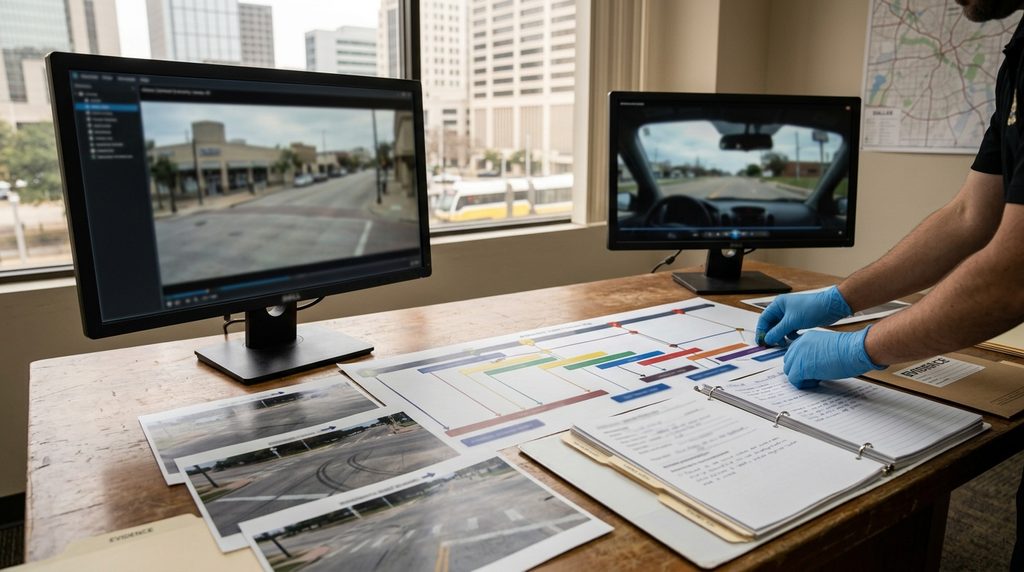
Preserve Potential Video Evidence
This is an easy thing to overlook.
A Dallas intersection may have:
- Business security cameras
- Parking-lot cameras
- Dashcams
- Doorbell cameras
- Other nearby recording systems
If a camera may have captured the accident, note where it is.
Why act quickly?
Because some systems automatically overwrite old footage.
You do not need to obtain the footage yourself.
Just preserve information about where potentially relevant video may exist.
What If The Insurance Company Starts Asking Questions?
It is normal for an insurer to investigate.
You may be asked:
- How did the accident happen?
- Where were you driving?
- When did you first notice the other vehicle?
- Were you injured?
- Where did you receive treatment?
- What damage occurred?
Answer truthfully.
If you do not remember something, say that.
Do not guess just because you think an exact answer is expected.
TDI recommends keeping notes about communications with insurers, including the date and the identity of the person you spoke with.
What If The Insurance Company Disagrees With You?
Sometimes the claim does not proceed smoothly.
The insurer may:
- Dispute fault
- Question the severity of an injury
- Disagree about vehicle damage
- Ask for additional documentation
- Offer less than you expected
Start by understanding the reason.
Ask what information the insurer relied on.
Gather documentation that addresses the disagreement.
TDI advises consumers who disagree with an insurance decision to communicate with the insurer and provide supporting documentation.
Do Not Rush To Accept A Settlement
A settlement offer can be tempting.
You may simply want the whole situation to end.
But before signing, understand what the agreement does.
Ask:
- Does it resolve the entire claim?
- Are medical bills included?
- Is future treatment still possible?
- Have lost wages been documented?
- Are other expenses included?
- What rights are you giving up?
Once a settlement is finalized, going back for additional compensation may not be possible.
If you are unsure what you are signing, consider getting professional advice before accepting.
When Should You Consider A Lawyer?
Not every Dallas car accident needs an attorney.
If:
- The injury is minor
- Fault is clear
- The insurance company is cooperating
- Losses are limited
- The claim is straightforward
you may decide to handle it yourself.
The calculation changes when the accident becomes more complicated.
Consider speaking with a lawyer when:
You Have A Serious Injury
You may need surgery, extensive treatment, rehabilitation, or long-term care.
Fault Is Disputed
The other driver or insurer says you caused the accident.
You Cannot Work Normally
Your income has been significantly affected.
Treatment Is Ongoing
You do not yet know the full medical consequences.
Several Parties Are Involved
The accident involves multiple drivers, companies, or insurance policies.
The Insurance Company Denies The Claim
You are unable to reach an agreement about responsibility or compensation.
The Settlement Offer Does Not Reflect Your Losses
You are unsure whether important expenses or future consequences have been considered.
In these situations, car accident lawyers dallas may be able to help you understand the evidence, insurance process, and available options.
You Do Not Have To Decide Everything On Day One
This may be the most useful thing to remember.
The day of the accident is about safety.
The next day is about health and documentation.
The following days are about understanding the insurance process and the full effect of the injury.
You can make decisions as you learn more.
There is no prize for rushing through the process.
What About The Legal Deadline?
Texas Civil Practice and Remedies Code §16.003 generally provides a two-year limitations period for many personal injury actions. The statute also contains different rules for certain situations, so the deadline for a specific claim should not be assumed without looking at the circumstances.
Two years can sound like a long time.
It is not.
Treatment, insurance negotiations, work, and everyday life can consume months.
If you think you may have a legal claim, do not wait until the deadline is approaching to find out what applies.
A Dallas Accident Checklist You Can Save
At The Scene
- Check for injuries
- Call 911 when necessary
- Get somewhere safe
- Exchange information
- Photograph the vehicles
- Photograph the roadway
- Collect witness information
- Write down what happened
Within The First Day
- Address medical concerns
- Notify your insurer
- Save the police information
- Back up photographs
- Start an accident folder
During The Following Days
- Keep medical records
- Save bills and receipts
- Track missed work
- Record insurance communications
- Preserve possible video evidence
- Keep repair estimates
If The Claim Becomes Complicated
- Identify disputed issues
- Preserve important evidence
- Review the insurance position
- Consider legal guidance
- Check applicable deadlines
FAQ
If nobody is injured and the vehicle can be moved safely, Texas Department of Insurance advises moving out of the road. Do not put yourself at risk to move a vehicle or collect evidence.
Call police when someone is injured or a driver leaves the scene. Police may also be appropriate in situations involving serious safety concerns, an inability to move vehicles, or other circumstances requiring law-enforcement assistance.
Photograph the vehicles, damage, license plates, roadway, lane markings, traffic signals, signs, debris, and surrounding conditions when it is safe. TDI recommends documenting the accident scene and road angles.
If you are injured, develop symptoms, or have concerns about your health, seek appropriate medical attention. Keep the resulting medical records and bills.
Consider legal guidance when the accident involves serious injuries, disputed fault, significant financial losses, multiple parties, complicated insurance issues, ongoing treatment, or an uncertain settlement.
Final Thoughts
A car accident can make everything feel urgent.
You want your vehicle fixed.
You want to know who is paying.
You want to know whether your injuries will go away.
And you probably want the whole thing behind you.
Try not to make every decision at once.
First, get safe.
Then take care of your health.
Preserve the evidence while it is still available.
Keep your records organized.
Understand what the insurance company is asking for.
And if the claim becomes serious or difficult, get advice before making a decision that could be hard to undo.
If you are dealing with a significant injury after a Dallas collision, Thompson Law’s Dallas injury resources provide a local starting point.
For local contact and directions, the Thompson Law Dallas profile is also available.