


Choosing performance scrub pants involves more than deciding which silhouette looks best. Jogger, tapered, flare, and wide-leg scrub pants distribute fabric differently around the hips, thighs, knees, calves, and ankles, which can influence mobility, temperature comfort, footwear interaction, and the overall feel of a work uniform.
Healthcare professionals comparing Epic scrub pants can currently find multiple silhouettes within the same performance-oriented collection, including women’s jogger, tapered, flare, and wide-leg pants as well as men’s jogger and tapered options. The right silhouette depends on body proportions, work movements, workplace requirements, waistband preference, and how much room the wearer prefers through different parts of the leg.
Quick Answer
Choose scrub pants according to how the silhouette fits your body and your actual workday:
- Jogger scrub pants: Best suited to wearers who prefer a close lower-leg fit and contained ankle area.
- Tapered scrub pants: Provide a streamlined shape that gradually narrows toward the ankle without necessarily using a fitted cuff.
- Flare scrub pants: Fit more closely through the upper leg before widening toward the hem, creating more lower-leg room.
- Wide-leg scrub pants: Provide greater space through much of the leg and a more fluid overall silhouette.
- Waistband design: Yoga waist, elastic, drawstring, and combination waistbands can significantly affect comfort.
- Fabric performance: Stretch, recovery, weight, and drape should complement the pant shape.
- Movement testing: Sit, bend, walk, take a long step, and perform a shallow squat before deciding on a fit.
- Workplace requirements: Employer dress standards should take priority over fashion preferences.
There is no universally best scrub pant silhouette. The best option is the one that supports mobility, fit, footwear, professional appearance, and all-day comfort for the individual wearer.
Why does scrub pant silhouette matter?
Scrub pants cover some of the body’s most active joints and movement areas.
During a healthcare shift, the wearer may repeatedly move through the:
- Hips
- Knees
- Ankles
- Waist
- Thighs
A worker may walk long hallways, sit for documentation, bend toward equipment, crouch, reposition the legs, or repeatedly move between sitting and standing.
NIOSH describes ergonomics as fitting work tasks to workers’ capabilities and identifies awkward postures and physical demands as factors considered in workplace ergonomics. NIOSH ergonomics resources focus primarily on job and workplace design rather than clothing, but they reinforce why freedom of movement matters in physically active work.
Scrub pants do not prevent musculoskeletal injuries, but poorly fitting clothing can add unnecessary restriction during movement.
Different silhouettes distribute fabric differently
Two pants made from the same fabric can feel different if one is a jogger and the other is wide-leg.
The difference comes from where the garment provides room.
A jogger may provide space through the upper leg but narrow significantly toward the ankle.
A wide-leg pant maintains more room through much of the leg.
A flare typically widens toward the lower portion.
A tapered pant narrows gradually.
This changes:
- How fabric moves around the legs
- How much material surrounds the calves
- How the pants interact with footwear
- How the garment feels while sitting
- How the silhouette looks when standing
The choice should therefore be based on more than appearance.
What are jogger scrub pants?
Jogger scrub pants generally use a narrower lower-leg shape and a fitted ankle finish.
Some designs use a knit cuff, while others create a close-fitting lower leg through garment construction.
Joggers have become popular in medical workwear because they create a contemporary, streamlined silhouette.
Who may prefer jogger scrubs?
Joggers may suit healthcare professionals who:
- Prefer less loose fabric around the ankles
- Like a modern athletic-inspired silhouette
- Want a more contained lower leg
- Prefer pants that visually narrow toward footwear
The fitted lower-leg area can also make the pant silhouette feel more controlled during walking.
What should be checked when trying joggers?
Focus on four areas:
Calves:
The pants should not create uncomfortable compression.
Ankles:
A cuff or narrow opening should sit comfortably.
Knees:
The fabric should allow bending without excessive tension.
Inseam:
The pants should sit at the intended position rather than gathering excessively above the ankle.
Joggers still need hip and thigh room
The lower-leg design receives most of the visual attention, but upper-leg fit is equally important.
A healthcare professional should still be able to:
- Sit comfortably
- Take a long step
- Bend
- Squat slightly
- Move quickly
If the hips or thighs are restrictive, the ankle silhouette becomes irrelevant.
What are tapered scrub pants?
Tapered scrub pants gradually narrow from the upper leg toward the ankle.
Unlike many joggers, they typically do not depend on a fitted ankle cuff to create their shape.
The result is a streamlined leg profile that may feel less sporty than a traditional jogger.
Why choose tapered scrub pants?
Tapered pants may appeal to healthcare professionals who want:
- A clean lower-leg shape
- Less fabric around the ankle than straight or wide-leg pants
- A polished silhouette
- Room through the upper leg with gradual narrowing below
They can provide a middle ground between a close-fitting jogger and a more open-leg pant.
Check the calf opening
A tapered pant can fit comfortably through the thighs but become too narrow around the calves.
This is especially relevant for wearers with:
- Muscular calves
- Larger lower-leg proportions
- A preference for looser movement
Walk several steps and sit down.
Notice whether the fabric pulls around the lower legs.
Evaluate the hem with work shoes
A tapered hem may fall differently depending on footwear.
Try the pants with shoes similar to those normally worn at work.
Check whether the hem:
- Sits cleanly above the shoe
- Bunches excessively
- Rides upward
- Feels restrictive during walking
The ideal length depends on both inseam and footwear.
What are flare scrub pants?
Flare scrub pants generally fit closer through the upper portion of the leg and widen as they move toward the hem.
This creates more room around the lower leg than jogger or tapered styles.
The Epic assortment currently includes a women’s yoga-waistband flare pant, demonstrating how silhouette and waistband construction can be combined within the same performance collection.
Why might healthcare professionals choose flare scrubs?
Flare pants may appeal to wearers who:
- Prefer a more open lower leg
- Dislike ankle cuffs
- Want additional room around the calves
- Prefer the visual balance of a wider hem
- Like a more traditional or fashion-forward pant profile
The extra lower-leg space can create a different walking feel from narrow silhouettes.
Length matters more with flare pants
The wider hem can make excessive length particularly noticeable.
A flare pant that is too long may:
- Drag on the floor
- Fold under footwear
- Collect debris
- Interfere with walking
The garment should be tested with normal work shoes.
The hem should remain practical for the workplace.
What are wide-leg scrub pants?
Wide-leg scrub pants provide a more generous shape through much of the leg.
Unlike flare pants, which typically widen more noticeably toward the lower leg, wide-leg pants tend to maintain greater room from higher in the garment.
The current Epic collection includes a women’s wide-leg performance pant alongside its jogger, tapered, and flare silhouettes.
Who may prefer wide-leg scrub pants?
Wide-leg pants may appeal to healthcare professionals who:
- Prefer more room through the thighs and calves
- Dislike close-fitting lower legs
- Prefer fluid garment movement
- Want a relaxed modern silhouette
- Feel restricted in tapered or jogger cuts
The additional fabric changes the wearing experience.
More fabric does not automatically mean more mobility
A wide-leg pant can provide considerable space, but mobility still depends on:
- Rise
- Waist fit
- Hip construction
- Fabric stretch
- Garment length
A very wide pant with an unsuitable rise or waistband can still be uncomfortable.
The entire garment should be evaluated.
Jogger vs tapered scrub pants: what’s the difference?
These two silhouettes are often confused because both narrow toward the ankle.

The key difference is generally the lower-leg finish.
Jogger
A jogger usually creates a visibly close ankle area and may include a cuff.
The shape often has a more athletic appearance.
Tapered
A tapered pant gradually narrows without necessarily ending in a fitted cuff.
The silhouette may appear more like a streamlined trouser.
Which one is better for movement?
Neither is automatically better.
Movement depends on:
- Thigh room
- Knee room
- Fabric stretch
- Calf fit
- Waistband construction
A well-fitted tapered pant can provide excellent mobility.
So can a properly fitted jogger.
The decision should depend on where the wearer prefers more or less fabric.
Flare vs wide-leg scrub pants: what’s the difference?
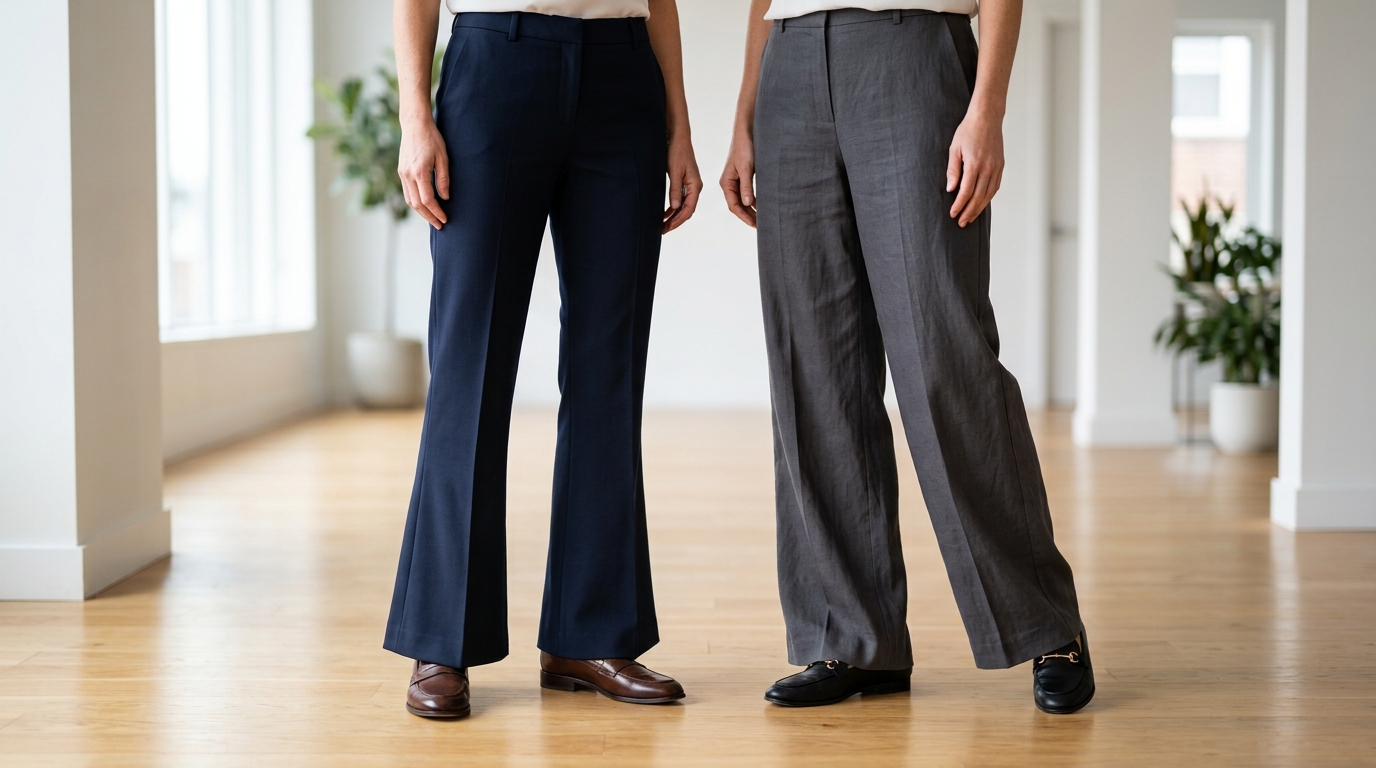
Flare and wide-leg pants both provide more lower-leg room than a typical jogger or tapered pant, but they create that room differently.
Flare silhouette
A flare generally begins closer through the upper leg and expands toward the lower leg.
Wide-leg silhouette
A wide-leg pant generally provides more consistent room throughout a larger portion of the leg.
Which feels looser?
Wide-leg pants generally create the roomier overall silhouette.
Flare pants may still fit relatively close around the thighs before widening.
Body proportions can change how each style feels, so trying both is useful where available.
Which scrub pants are best for nurses?
There is no single pant silhouette that works best for all nurses.
Different nursing roles involve different amounts of walking, sitting, bending, and patient interaction.
A nurse should evaluate:
- Waistband stability
- Hip mobility
- Knee flexibility
- Pocket access
- Fabric stretch
- Pant length
Joggers for active movement
Some nurses prefer joggers because the lower leg remains contained.
This may feel convenient during fast-paced movement.
However, calf and ankle fit should remain comfortable.
Tapered pants for a streamlined fit
Tapered pants may appeal to nurses who want a clean silhouette without a jogger cuff.
Flare and wide-leg pants for additional lower-leg room
Nurses who dislike narrow lower-leg styles may prefer more open silhouettes.
The best choice remains individual.
Scrub pants should not be selected simply because one style is currently fashionable.
Which scrub pants are best for doctors?
Doctors may work across hospitals, outpatient clinics, procedural areas, or specialist practices.
The ideal scrub pant depends on that environment.
Some physicians may prefer a streamlined tapered pant because of its trouser-like shape.
Others may choose joggers for a more athletic fit.
Women who prefer greater lower-leg room may consider flare or wide-leg silhouettes.
The priorities should include:
- Professional appearance
- Sitting comfort
- Walking mobility
- Pocket needs
- Workplace dress policies
Professionalism is not determined by one pant silhouette.
Which scrub pants work well for veterinary professionals?
Veterinary professionals may crouch, kneel, bend, and move around animals.
Lower-body mobility can therefore be particularly important.
They should test pants through:
- Sitting
- Crouching
- Taking a long step
- Bending the knees
- Standing again
A jogger may keep the ankle area contained.
A wide-leg style may provide more overall leg room.
A tapered pant may balance room and a streamlined shape.
The best choice depends on body proportions and work environment.
Which scrub pants are comfortable for dental professionals?
Dental professionals may spend substantial time seated.
Pant comfort should therefore be evaluated from a seated position rather than only while standing.
Pay particular attention to:
- Waistband pressure
- Pant rise
- Hip tension
- Thigh room
- Knee position
A narrow lower leg may have little effect on seated comfort if the waist and rise fit properly.
The waistband may matter more than whether the pant is jogger or flare.
How important is waistband design?
Very important.
A comfortable leg silhouette can still become frustrating if the waistband does not suit the wearer.
Common scrub pant waistbands include:
- Yoga-style waistbands
- Full elastic
- Half elastic
- Drawstrings
- Elastic-and-drawstring combinations
Each creates a different fit experience.
What is a yoga waistband?
Yoga-style waistbands generally create a wider, flexible band around the waist.
Some wearers prefer the way pressure is distributed across a broader area.
When trying this type of waistband:
- Sit for several minutes.
- Bend forward.
- Walk.
- Stand again.
Check whether the waistband remains secure.
Are elastic waistbands comfortable?
Elastic can provide flexible fit and easy dressing.
However, comfort depends on:
- Elastic tension
- Band width
- Waist proportions
- Sitting position
A waistband that feels fine while standing may feel tighter after extended sitting.
Always test both positions.
What about drawstring scrub pants?
Drawstrings allow the wearer to adjust waist tension.
They can be useful for people who want more control over how firmly their pants sit.
Check whether the drawstring:
- Stays tied
- Creates pressure when sitting
- Is easy to adjust
- Works with the elastic construction where applicable
A secure waistband should not require constant attention during work.
How does performance fabric change scrub pant fit?
Pant silhouette and fabric performance work together.
The same jogger pattern could feel very different in two different textiles.
Important fabric characteristics include:
- Stretch
- Recovery
- Weight
- Drape
- Surface texture
Stretch supports movement
Stretch allows fabric to extend as the wearer bends, sits, and walks.
The hips and knees may particularly benefit from flexible construction.
However, stretch does not replace adequate garment room.
Recovery supports shape retention
Recovery describes how the fabric returns toward its original form after stretching.
Repeated sitting and knee bending can put tension on scrub pants throughout the day.
A performance fabric should therefore be evaluated after several movements rather than only once.
Fabric weight affects each silhouette differently
A lightweight wide-leg pant may move fluidly because more fabric is present around the legs.
The same lightweight textile in a jogger may feel more contained.
Neither is automatically better.
The garment and fabric should be evaluated together.
Why does fabric drape matter in scrub pants?
Drape is especially noticeable in pant silhouettes.
It describes how the material hangs and moves.
Jogger drape
A jogger’s lower-leg construction controls much of the fabric near the ankle.
Tapered drape
Tapered pants gradually narrow, creating a cleaner downward line.
Flare drape
A flare creates more movement toward the lower leg and hem.
Wide-leg drape
A wide-leg pant allows fabric to move more freely across much of the leg.
Wearers should walk several steps while trying each style.
Watch how the fabric moves rather than judging only a static mirror image.
Do scrub pockets affect pant comfort?
Yes.
Pant storage can alter garment balance.
Common pocket locations include:
- Front hip pockets
- Side pockets
- Cargo pockets
- Back pockets
- Zippered compartments
The number of pockets is less important than whether they are useful.
Consider what is actually carried
Depending on role and workplace policy, this may include:
- Pens
- Notes
- Identification items
- Communication devices
- Approved work tools
A heavily loaded cargo pocket can pull on one side of the pant.
This may be more noticeable during fast walking.
Test pockets while sitting
Items stored around the front or side of the hips may feel different in a seated position.
Before relying on a pocket for a frequently carried item, consider:
- Accessibility
- Depth
- Security
- Seated comfort
Functional storage should support rather than interfere with movement.
How should women’s scrub pants be selected?
Women can compare women’s scrub pants according to silhouette, waistband construction, rise, fabric, and fit through the hips and thighs.
Several factors deserve separate attention.
Waist-to-hip proportions
Two women with similar waist measurements can have different hip and thigh proportions.
This may affect which silhouette feels most comfortable.
Rise preference
The rise influences how the waistband sits and how the pants feel while seated.
Lower-leg preference
Some women strongly prefer a contained jogger ankle.
Others dislike narrow calves and prefer flare or wide-leg styles.
There is no universal correct silhouette.
How should men’s scrub pants be selected?
Men comparing men’s scrub pants should pay particular attention to:
- Waist
- Rise
- Thigh room
- Knee movement
- Calf fit
- Inseam
The current Epic collection offers men’s tapered and jogger pants, giving wearers two different streamlined lower-leg approaches within the same collection.
Thigh fit can determine overall comfort
A pant may fit correctly at the waist but feel restrictive through the thighs.
Take a long step and sit.
If the fabric creates severe tension, another size or silhouette may be more appropriate.
Calf size matters in narrow styles
Men with larger calves should pay particular attention when trying jogger and tapered pants.
A suitable upper-leg fit does not guarantee lower-leg comfort.
Does height affect which scrub pant style works best?
Height does not dictate silhouette, but it can affect how each style falls.
Inseam matters considerably.
Joggers
The ankle finish should sit where the design intends.
If the pant is too long, fabric may gather above the cuff.
Tapered pants
The hem should fall cleanly around the footwear.
Flare pants
Excessive length can create floor contact.
Wide-leg pants
The broad hem makes proper length especially important.
Where multiple inseams are available, wearers should consider both body measurements and typical work shoes.
Should scrub pants touch the floor?
Generally, work pants should have a practical length that does not create unnecessary floor contact or interfere with walking.
This is especially relevant for flare and wide-leg silhouettes because of their broader hems.
The correct length depends on:
- Inseam
- Shoe height
- Pant design
- Workplace environment
A fitting should ideally be performed with footwear similar to what will normally be worn.
Can scrub pants affect workplace safety?
The pant silhouette itself should not be treated as safety equipment.
However, garment length and fit should not unnecessarily interfere with movement.
Workplace safety is primarily addressed through appropriate job design, procedures, equipment, and hazard controls. OSHA’s ergonomics overview emphasizes adapting work to workers and reducing risk factors through workplace solutions.
Scrub pants cannot substitute for:
- Safe patient-handling practices
- Proper footwear
- Required PPE
- Workplace ergonomic controls
They should simply provide an appropriate, nonrestrictive workwear fit.
How should performance scrub pants be cared for?
Always follow the garment care label.
Performance fabrics can contain stretch fibers and textile constructions that have specific washing and drying instructions.
The Federal Trade Commission’s Care Labeling Rule requires covered textile apparel to provide regular-care instructions to purchasers.
Review:
- Washing instructions
- Water temperature guidance
- Drying instructions
- Bleach restrictions
- Ironing guidance
Do not assume every performance fabric uses the same care routine
Two scrub pants can both contain polyester and spandex yet have different recommended care.
Follow the garment-specific directions.
Proper care is particularly important for components such as:
- Stretch fibers
- Elastic waistbands
- Knit cuffs
- Drawstrings
The best scrub pant is one that fits both the workday and the wearer’s realistic laundry routine.
How should you test scrub pants before choosing a silhouette?
A structured fitting routine makes comparison easier.
Step 1: Stand naturally
Check:
- Waist
- Rise
- Hips
- Thighs
- Overall length
Step 2: Sit for several minutes
Notice:
- Waistband pressure
- Rise comfort
- Thigh tension
- Pocket position
Step 3: Take a long step
This tests movement through the hips and thighs.
Step 4: Bend the knees
Evaluate knee flexibility and fabric stretch.
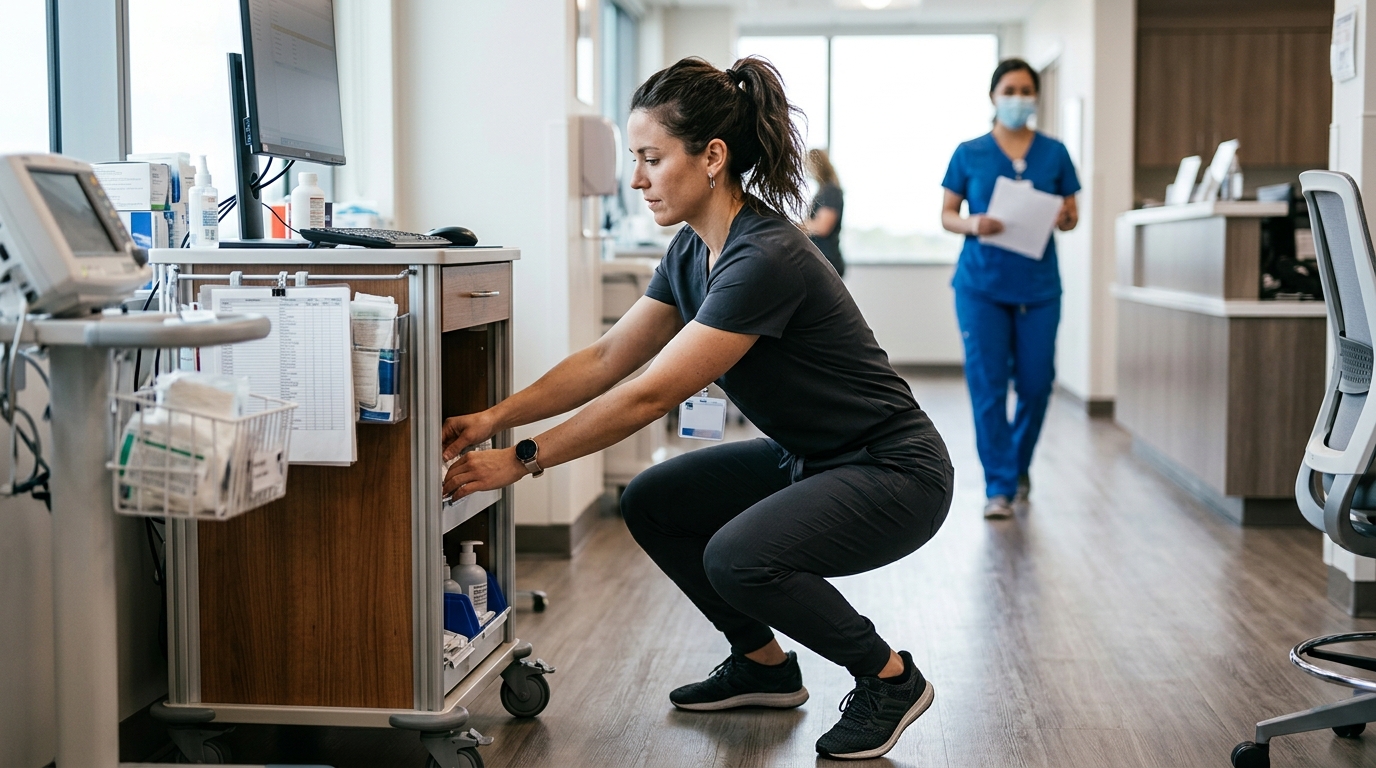
Step 5: Perform a shallow squat
This can reveal tension through:
- Waist
- Hips
- Thighs
- Knees
Step 6: Walk normally
Notice how the lower-leg silhouette moves.
Step 7: Check footwear interaction
Make sure cuffs or hems sit appropriately with normal work shoes.
Step 8: Test pockets
Add representative lightweight work items where appropriate.
Notice whether pocket loading changes the fit.
Which scrub pant silhouette should you choose?
A simple decision framework can help.
Choose joggers if:
- You prefer a contained ankle.
- You like an athletic-inspired silhouette.
- Narrow lower legs feel comfortable.
- You do not want loose fabric around the hem.
Choose tapered pants if:
- You want a streamlined shape.
- You prefer narrowing without a jogger-style cuff.
- You like a trouser-inspired appearance.
- Your calves remain comfortable in the cut.
Choose flare pants if:
- You want more lower-leg room.
- You prefer a wider hem.
- You dislike ankle cuffs.
- The garment length works with your shoes.
Choose wide-leg pants if:
- You prefer substantial leg room.
- You like fluid fabric movement.
- Close-fitting lower legs feel restrictive.
- The wider hem remains practical in your workplace.
These are starting points rather than rules.
Individual body proportions can make one silhouette feel very different from another.
A Practical Performance Scrub Pants Checklist
Before choosing scrub pants, evaluate the following.
Waist and Rise
- Does the waistband remain secure?
- Is it comfortable while sitting?
- Does the rise suit your proportions?
- Does the waistband roll or slide?
Hips and Thighs
- Can you take a long step?
- Can you sit without excessive pulling?
- Does the fabric move when you bend?
Knees and Lower Legs
- Can you bend comfortably?
- Are jogger cuffs too tight?
- Do tapered pants restrict the calves?
- Does a wider silhouette create excess fabric?
Length
- Does the pant work with your usual footwear?
- Does the hem stay off the floor?
- Does fabric bunch excessively?
Fabric
- Is there useful stretch?
- Does the fabric recover after movement?
- Is the weight appropriate?
- Do you like the drape?
Function
- Are pockets accessible?
- Do stored items affect movement?
- Is the pant silhouette appropriate for the workplace?
Care
- Are washing instructions practical?
- Is the recommended drying method manageable?
- Does the pant fit into your normal workwear rotation?
Final Thoughts
Jogger, tapered, flare, and wide-leg scrub pants can all work well for healthcare professionals when the garment fits properly and suits the work environment.
The differences are primarily about where fabric is distributed and how the lower leg is shaped.
Joggers provide a contained ankle. Tapered pants gradually narrow. Flare pants widen toward the hem. Wide-leg pants provide greater room across much of the leg.
But silhouette should never be considered alone.
Waistband construction, rise, stretch, recovery, fabric weight, drape, pocket placement, inseam, footwear, and workplace requirements can have just as much influence on daily comfort.
The strongest choice is not necessarily the trendiest pant. It is the scrub pant that allows the wearer to sit, walk, bend, reach, and work comfortably without repeated adjustment or unnecessary restriction.
Frequently Asked Questions
Are jogger scrub pants better than tapered scrub pants?
Neither style is universally better. Joggers generally provide a more contained ankle and may use a cuff, while tapered pants narrow gradually toward the hem. The best option depends on calf fit, movement preference, footwear, and desired appearance.
Are wide-leg scrub pants good for healthcare workers?
Wide-leg scrub pants can work well for healthcare professionals who prefer more room through the legs and fluid fabric movement. Proper length is important because a broad hem should remain practical around work shoes and the clinical environment.
What is the difference between flare and wide-leg scrub pants?
Flare pants typically fit more closely through the upper leg and widen toward the hem. Wide-leg pants generally maintain greater room through more of the leg. Both provide more lower-leg space than most jogger or tapered silhouettes.
Which scrub pants are most comfortable for long shifts?
Comfort depends on waistband design, rise, hip and thigh fit, fabric stretch, pant length, and personal preference. No single silhouette is automatically best for long shifts. Scrub pants should be tested while sitting, walking, and bending.
Should scrub pants be tight or loose?
Scrub pants should provide enough room for normal movement without excessive tension or unnecessary fabric bulk. A streamlined pant can fit close to the body while still allowing mobility, while a relaxed style should remain controlled enough for the workplace.
How should scrub pants fit around the ankle?
The correct ankle fit depends on the silhouette. Joggers typically fit more closely around the ankle, tapered pants narrow toward the hem, and flare or wide-leg styles remain more open. None should interfere with normal walking or footwear.