

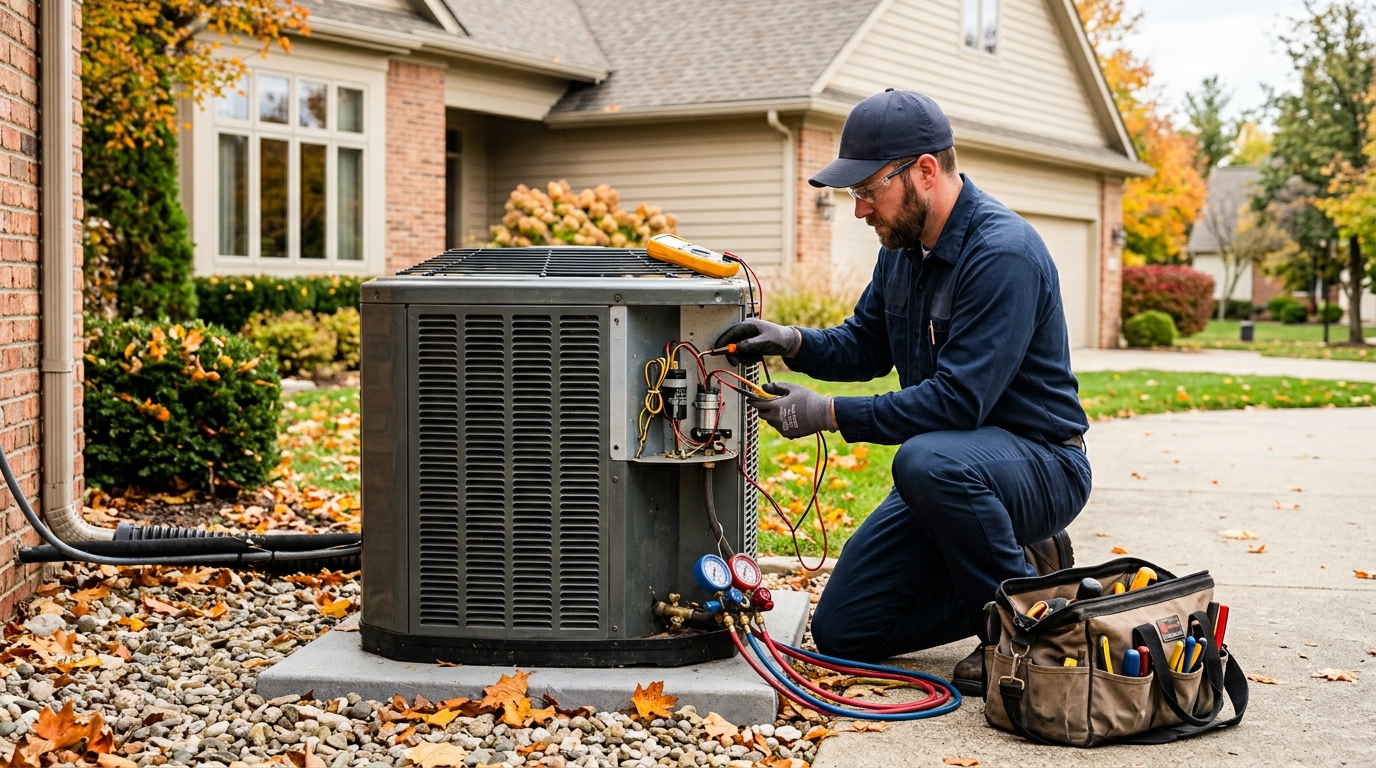
Reliable heating and cooling is especially important for homeowners in Saline, Michigan, where HVAC equipment must operate through cold winters, warm and humid summers, and substantial seasonal temperature changes.
Routine HVAC maintenance can help homeowners prepare their equipment for these changing conditions.
Maintenance does not guarantee that a furnace, air conditioner, or heat pump will never break down. However, regular inspection and service can identify developing problems, maintain appropriate airflow, keep important components clean, and provide homeowners with better information about equipment condition.
For homeowners experiencing unusual noises, poor airflow, temperature problems, or equipment that no longer operates normally, professional HVAC repair Saline MI can help determine whether the problem requires maintenance, repair, or broader system evaluation.
The following maintenance practices can help Saline homeowners take a more proactive approach to year-round home comfort.
Quick Answer
Saline homeowners should regularly inspect HVAC filters, keep supply and return vents unobstructed, maintain clearance around outdoor equipment, monitor thermostat operation, watch for unusual noises or water, and schedule professional maintenance before peak heating and cooling seasons.
The objective is to catch developing problems before Michigan’s hottest or coldest weather places maximum demand on the HVAC system.
Key Takeaways
- HVAC filters should be inspected regularly and replaced when appropriate.
- Outdoor equipment needs adequate clearance and airflow.
- Supply registers and return grilles should remain unobstructed.
- Spring is a useful time to prepare cooling equipment.
- Fall is a useful time to prepare heating equipment.
- Unusual noises, odors, leaks, and cycling behavior deserve attention.
- Heat pumps require both heating- and cooling-season consideration.
- Professional maintenance complements rather than replaces homeowner upkeep.
1. Inspect Your HVAC Filter Regularly
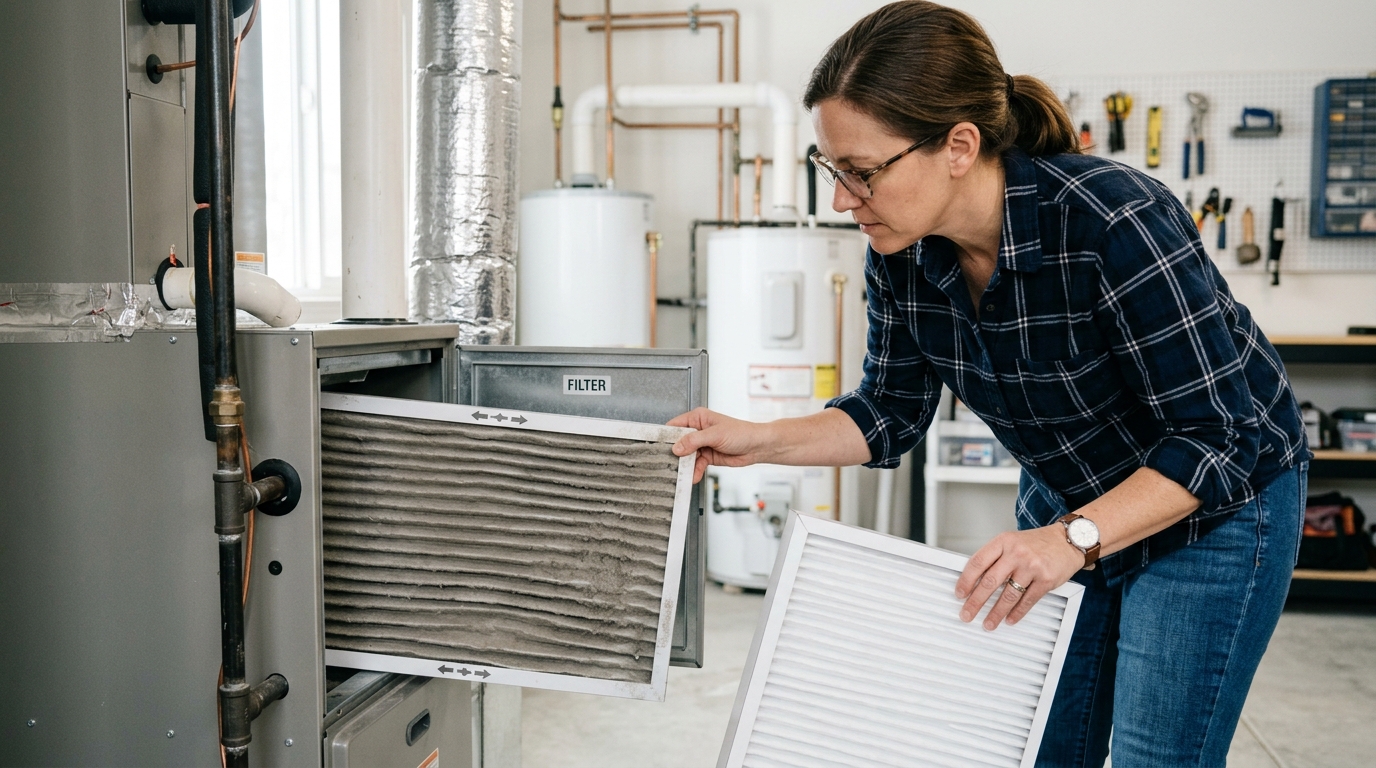
Filter maintenance is one of the simplest HVAC tasks homeowners can perform.
Filters capture airborne particles before they travel farther into the HVAC system.
As a filter accumulates debris, resistance to airflow can increase.
A heavily loaded filter may contribute to:
- Reduced airflow
- Longer equipment runtime
- Comfort problems
- Increased blower workload
- Greater particle accumulation elsewhere in the system
There is no universal replacement interval appropriate for every home.
Filter life depends on:
- Filter type
- Filter dimensions
- HVAC runtime
- Household occupancy
- Pets
- Indoor dust
- Renovation activity
Instead of relying entirely on a calendar, Saline homeowners should inspect filters regularly and follow equipment and filter-manufacturer recommendations.
2. Use the Correct Filter for Your HVAC System
A higher filtration rating is not automatically better for every HVAC system.
More efficient filters can capture smaller particles, but filter selection also affects airflow resistance.
Homeowners should consider:
- Filter dimensions
- MERV rating
- Filter depth
- Surface area
- HVAC manufacturer requirements
- Blower capability
Installing a filter that is substantially more restrictive than the system was designed to accommodate may create airflow problems.
Homeowners interested in upgrading filtration should make sure the new filter is compatible with their equipment.
3. Keep Return-Air Grilles Clear
Return-air grilles allow household air to travel back toward the furnace or air handler.
Furniture, rugs, boxes, or other objects should not block them.
Restricted return airflow can affect overall HVAC performance.
Homeowners should periodically walk through the house and check that return openings remain unobstructed, particularly after:
- Moving furniture
- Rearranging rooms
- Renovations
- Installing new flooring
Maintaining an open airflow path is a simple but important part of HVAC upkeep.
4. Don’t Block Supply Registers
Supply registers deliver conditioned air into occupied rooms.
Common obstructions include:
- Furniture
- Curtains
- Rugs
- Storage boxes
- Children’s toys
Blocking registers can contribute to uneven comfort.
Homeowners should also avoid closing large numbers of registers in an attempt to save energy unless the HVAC system was specifically designed for that type of zoning.
Changing airflow throughout a duct system can have consequences elsewhere in the system.
5. Keep Outdoor AC and Heat Pump Equipment Clear
Outdoor equipment needs adequate airflow.
Vegetation, leaves, grass clippings, and other debris can accumulate around the unit.
Homeowners can periodically check for:
- Leaves
- Weeds
- Tall grass
- Shrubs growing too close
- Windblown debris
- Objects stored against the unit
Clearance recommendations vary by equipment manufacturer, so homeowners should follow the requirements for their specific system.
The objective is to maintain adequate airflow without damaging coils or other components.
6. Be Careful Around Outdoor Coils
The outdoor coil contains thin metal fins that can be damaged relatively easily.
Homeowners should avoid:
- Aggressive pressure washing
- Sharp tools
- Bending fins
- Disassembling equipment
- Applying unknown chemicals
Professional cleaning may be appropriate when coils are substantially contaminated.
Homeowner maintenance should focus primarily on keeping the surrounding area clear and identifying obvious debris or damage.
7. Prepare Your Air Conditioner Before Summer
Cooling equipment should ideally be evaluated before sustained hot weather arrives.
Spring preparation may include:
- Inspecting the filter
- Clearing outdoor equipment
- Checking thermostat operation
- Opening supply registers
- Checking return grilles
- Running the cooling system briefly
- Listening for abnormal sounds
If the system fails to start or does not cool normally, scheduling heating and cooling Saline MI service before peak summer demand can reduce the likelihood of discovering the problem during the first major heat wave.
8. Prepare Your Heating System Before Winter
Fall is the corresponding preparation period for furnaces and other heating systems.
Homeowners can:
- Inspect the filter
- Test heating operation
- Check thermostat response
- Make sure registers are open
- Keep returns unobstructed
- Listen for unusual sounds
- Watch for abnormal odors after initial startup
Some temporary odor from accumulated dust may occur when heating equipment first operates after an extended period, but persistent burning, electrical, or unusual odors deserve professional attention.
9. Test Safety Alarms
Homes with fuel-burning appliances should have appropriate carbon monoxide alarms in accordance with manufacturer instructions and applicable requirements.
Smoke alarms should also be maintained and tested.
Homeowners should follow the alarm manufacturer’s instructions for:
- Testing
- Battery replacement
- Placement
- Equipment replacement
HVAC maintenance should never be treated as a substitute for appropriate household safety alarms.
10. Pay Attention to New HVAC Noises
HVAC systems naturally make sound while operating.
What matters is a change from normal behavior.
New noises may include:
- Grinding
- Squealing
- Rattling
- Buzzing
- Clicking
- Banging
Potential causes range from loose panels to motor, blower, electrical, or mechanical problems.
Not every unusual sound indicates a major failure.
However, investigating new noises early can sometimes prevent a developing problem from becoming more serious.
11. Watch for Water Around HVAC Equipment
Water appearing where it normally does not belong deserves investigation.
During cooling operation, air-conditioning systems remove moisture from indoor air and typically route condensate through a drainage system.
Potential problems can involve:
- Blocked drains
- Drain-pan issues
- Frozen coils
- Pump problems
- Plumbing near the equipment
Standing water can also damage nearby materials.
Homeowners should avoid repeatedly cleaning up unexplained water without determining why it is appearing.
12. Monitor HVAC Cycling Behavior
Homeowners do not need technical instruments to notice changes in system operation.
Pay attention when equipment begins:
- Starting and stopping unusually often
- Running much longer than normal
- Struggling to reach thermostat settings
- Operating continuously under ordinary weather conditions
Extreme Michigan weather can naturally increase runtime.
The important comparison is with the system’s normal behavior under similar conditions.
A major change can indicate that maintenance or repair is needed.
13. Don’t Ignore Weak Airflow
Weak airflow from supply registers may result from:
- Dirty filters
- Blocked registers
- Duct problems
- Blower issues
- Coil restrictions
- Other HVAC problems
If weak airflow occurs throughout the house, the issue may involve the central system.
If it affects only one room, the problem may be more localized.
Persistent airflow problems should be diagnosed rather than compensated for by continually changing thermostat settings.
14. Check Your Thermostat Before Assuming the HVAC System Failed
Some apparent HVAC problems originate at the thermostat.
Before requesting service, homeowners can verify basic settings such as:
- Heating versus cooling mode
- Temperature setting
- Schedule
- Fan setting
- Battery condition, where applicable
Smart thermostats may also have:
- Vacation settings
- Occupancy schedules
- Energy-saving modes
- App-based overrides
Checking basic settings can sometimes resolve a simple control issue.
Repeated thermostat problems, however, may require professional evaluation.
15. Keep Thermostat Programming Appropriate for the Equipment
Large temperature setbacks are not equally appropriate for every heating and cooling system.
Heat pumps deserve particular attention because thermostat strategy can affect how auxiliary or backup heat operates.
For homeowners using a heat pump Saline MI system, thermostat programming should be compatible with the heat pump and any supplemental heating configuration.
The goal is to balance comfort, energy use, and appropriate equipment operation.
Heat Pumps Need Year-Round Maintenance Attention
A conventional air conditioner primarily handles cooling.
A heat pump may operate during both summer and winter.
That means its outdoor equipment can accumulate substantially more annual operating hours.
Heat-pump maintenance may involve evaluation of:
- Filters
- Indoor and outdoor coils
- Blower operation
- Electrical components
- Refrigerant-related performance
- Defrost operation
- Thermostat controls
- Backup heating
Cold-weather operation also makes outdoor-unit condition especially important during Michigan winters.
Keep Snow From Obstructing Heat Pump Airflow
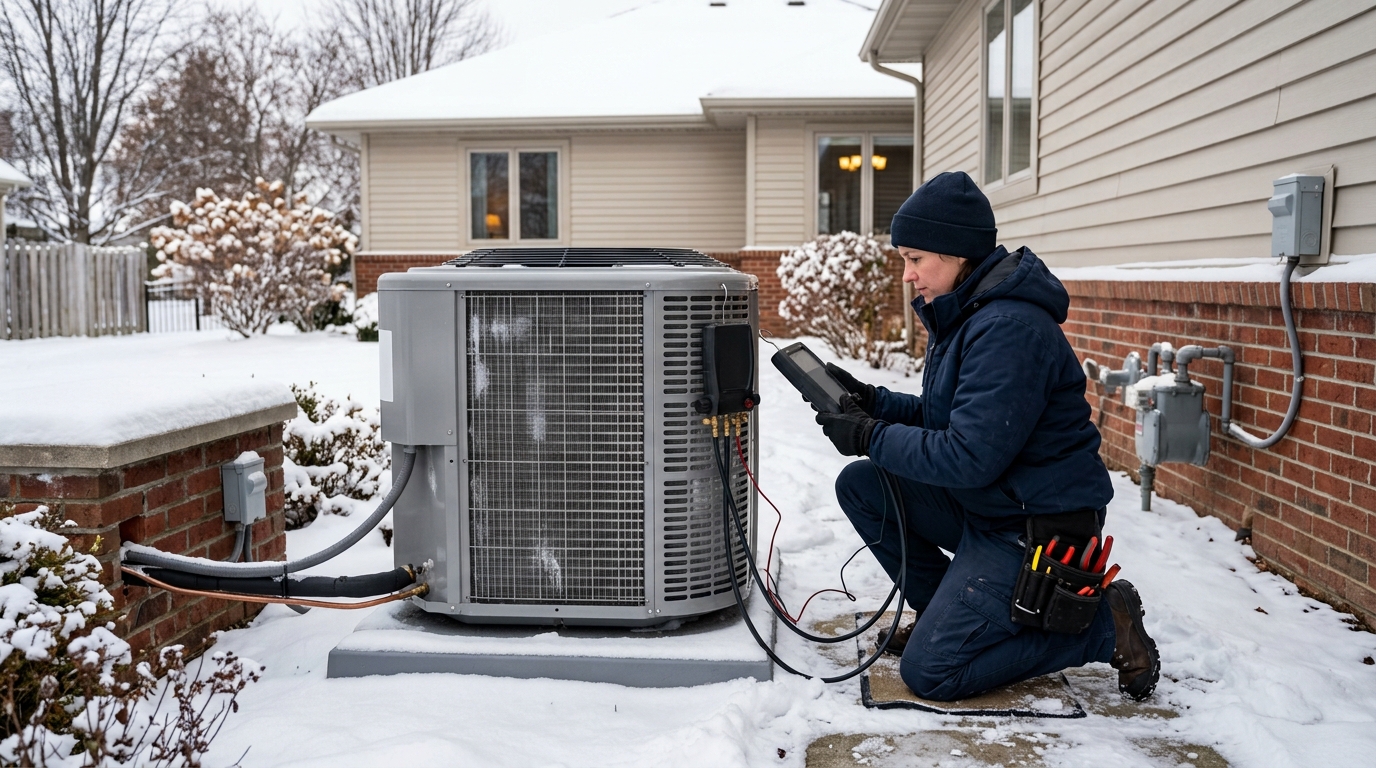
Because heat pumps operate outdoors during winter, snow conditions deserve attention.
Homeowners should make sure heavy snow accumulation does not completely obstruct airflow around outdoor equipment.
However, homeowners should avoid:
- Chipping ice aggressively
- Striking the equipment
- Using sharp tools on coils
- Pouring boiling water onto components
Heat pumps also perform automatic defrost cycles under appropriate conditions, so temporary frost followed by defrost operation can be normal.
Heavy or persistent ice that does not clear appropriately deserves professional evaluation.
Don’t Confuse Heat Pump Defrost With Equipment Failure
During cold, damp weather, frost may form on the outdoor coil of a heat pump.
The system can periodically enter defrost mode to remove that frost.
During defrost, homeowners may notice:
- A change in equipment sound
- Temporary steam around the outdoor unit
- Different operating behavior
Steam during a normal defrost cycle can look dramatic but is not automatically evidence of a malfunction.
Persistent heavy ice, however, can indicate a problem.
Check Utility Bills for Unusual Changes
Utility bills can provide clues about HVAC performance.
Homeowners should compare energy consumption rather than looking only at the dollar amount because utility rates and weather can change.
A significant increase in energy use may result from:
- Extreme weather
- Thermostat changes
- Longer equipment runtime
- HVAC problems
- Building-envelope problems
- Changes in household occupancy
A utility bill cannot diagnose the cause, but an unexplained trend can justify further investigation.
HVAC Maintenance and Home Energy Efficiency Work Together
Maintaining HVAC equipment is important, but the house itself also affects equipment workload.
Factors include:
- Insulation
- Air leakage
- Windows
- Doors
- Duct leakage
- Solar exposure
A well-maintained HVAC system may still run extensively if the home loses large amounts of heat during winter or gains substantial heat during summer.
For that reason, homeowners experiencing persistent comfort or energy problems should consider both equipment condition and the building envelope.
When DIY Maintenance Should Stop
Homeowners can safely handle basic observational and housekeeping tasks.
Technical HVAC work should generally be left to qualified professionals.
Examples include:
- Refrigerant work
- Electrical diagnosis
- Combustion adjustments
- Gas-system work
- Internal equipment disassembly
- Major control repairs
Attempting unfamiliar technical repairs can create equipment damage or safety hazards.
Knowing where homeowner maintenance ends is part of responsible HVAC ownership.
Professional Maintenance Should Be More Than a Visual Inspection
A useful professional maintenance visit should evaluate the actual operation of the equipment.
Depending on the system, technicians may inspect or test:
- Thermostat operation
- Electrical components
- Motors
- Blower operation
- Coils
- Drainage
- Filters
- Controls
- Heating operation
- Refrigerant-related performance
The exact maintenance process should match the equipment installed in the home.
A furnace, central air conditioner, and cold-climate heat pump do not have identical service requirements.
Maintenance Helps Create an Equipment History
Regular service becomes increasingly valuable as HVAC equipment ages.
Maintenance records can help homeowners track:
- Equipment condition
- Previous repairs
- Replaced components
- Recurring problems
- Recommended future work
This information can help when deciding whether another repair is reasonable or replacement planning should begin.
The goal is to avoid reaching an emergency with no information about the system’s history.
Saline Homeowners Should Think Seasonally
Michigan’s climate makes a seasonal HVAC routine practical.
Spring: prepare cooling equipment and heat pumps for warmer weather.
Summer: monitor cooling performance, airflow, drainage, and humidity.
Fall: prepare furnaces and heat pumps for heating season.
Winter: monitor heating reliability and keep heat-pump outdoor equipment unobstructed.
This approach spreads maintenance tasks throughout the year instead of waiting until something stops working.
Maintenance Is About Reliability, Not Just Efficiency
HVAC maintenance is often discussed only in terms of energy savings.
Efficiency matters, but reliability can be equally important.
Finding a developing electrical or mechanical problem during mild weather provides homeowners with more options than discovering it when:
- Outdoor temperatures are extremely cold
- A summer heat wave arrives
- Contractors are handling peak seasonal demand
Preventative maintenance cannot eliminate equipment failures, but it can reduce uncertainty.
Professional HVAC Maintenance Should Be Timed Around Peak Seasons
For Saline homeowners, the most practical maintenance schedule usually follows Michigan’s seasonal heating and cooling demands.
A useful approach is:
- Spring: cooling-system and heat-pump inspection
- Fall: furnace, heating-system, and heat-pump inspection
Pre-season maintenance gives homeowners time to address developing problems before equipment is needed continuously.
That can be especially valuable when older equipment is already showing symptoms such as unusual noise, weak airflow, longer operating cycles, or delayed startup.
Professional heating and cooling Saline MI service can help evaluate whether those symptoms are maintenance-related or require actual repair.
Furnace Maintenance Priorities for Saline Homes
Furnaces can operate for long periods during southeast Michigan winters.
A professional heating inspection may include evaluation of:
- Burner operation
- Ignition components
- Electrical connections
- Blower performance
- Thermostat response
- Safety controls
- Venting
- Filter condition
- Overall system cycling
Homeowners should also pay attention to changes such as:
- Longer heating cycles
- Repeated shutdowns
- New mechanical sounds
- Difficulty maintaining temperature
- Weak supply airflow
These symptoms do not automatically mean replacement is necessary, but they do deserve evaluation.
Air-Conditioning Maintenance Priorities
Cooling equipment benefits from inspection before hot and humid weather arrives.
Depending on the system, professional maintenance may involve:
- Condenser condition
- Indoor coil condition
- Electrical components
- Blower operation
- Refrigerant-related performance
- Condensate drainage
- Thermostat operation
- Overall cooling performance
A cooling system that begins operating normally in spring may still reveal problems under heavier summer demand.
That is why homeowners should continue watching equipment behavior throughout the season.
Heat Pump Maintenance Is a Two-Season Responsibility
Heat pumps deserve special attention because they may provide both heating and cooling.
A heat pump Saline MI system may accumulate substantially more annual operating hours than a conventional air conditioner.
Maintenance can include evaluation of:
- Indoor and outdoor coils
- Refrigerant-related performance
- Defrost controls
- Electrical components
- Blower operation
- Thermostat settings
- Backup heating
- Outdoor-unit condition
Because the heat pump works through winter, outdoor airflow and snow conditions also remain relevant after the cooling season ends.
Maintenance and Repair Are Not the Same Thing
Routine maintenance is intended to inspect, clean, test, and monitor equipment.
Repair addresses an actual fault or failed component.
For example:
Maintenance issue: a filter is becoming dirty and should be replaced.
Repair issue: the blower motor is failing and cannot move adequate airflow.
The distinction matters because homeowners should not expect a basic tune-up to correct every mechanical problem.
Likewise, a repair does not replace the need for ongoing maintenance.
If equipment has already developed a significant fault, professional HVAC repair Saline MI may be required before normal preventative service can resume.
Common Saline HVAC Problem: Weak Airflow
Weak airflow can originate from several areas.
Possible causes include:
- Dirty filters
- Closed or blocked registers
- Blower problems
- Duct restrictions
- Coil issues
- Return-air problems
Homeowners can begin by checking the filter and making sure supply and return openings are unobstructed.
If airflow remains weak, professional diagnosis is appropriate.
Repeatedly lowering or raising the thermostat will not correct the underlying airflow problem.
Common HVAC Problem: Uneven Room Temperatures
A home may have one room that is consistently warmer or colder than others.
Potential causes include:
- Duct leakage
- Poor balancing
- Insulation differences
- Air leakage
- Window exposure
- Inadequate return airflow
- HVAC equipment problems
If only one room is affected, the solution may not involve replacing the central HVAC system.
A targeted evaluation of the room, ductwork, and building envelope may be more appropriate.
Common HVAC Problem: Equipment Runs Too Long
Long operating cycles can be normal during severe outdoor conditions.
However, a noticeable change in runtime may indicate:
- Restricted airflow
- Dirty equipment
- Mechanical deterioration
- Thermostat problems
- Duct leakage
- Poor insulation
- Incorrect equipment sizing
The most useful comparison is with how the system normally behaves under similar weather conditions.
Common HVAC Problem: Short Cycling
Short cycling means equipment repeatedly starts and stops before completing normal cycles.
Possible causes can include:
- Thermostat problems
- Airflow restrictions
- Control faults
- Refrigerant-related problems
- Overheating
- Incorrect equipment sizing
Repeated short cycling can increase equipment wear and should not be ignored.
Common HVAC Problem: Unexpected Energy Increases
Energy consumption can rise because of:
- Colder or hotter weather
- Utility-rate changes
- Longer HVAC runtime
- Household occupancy changes
- Equipment problems
- Air leakage
- Insulation deficiencies
Homeowners should compare energy use over similar periods rather than relying only on one monthly bill.
An unexplained trend can indicate that further evaluation is worthwhile.
Common HVAC Problem: Water Near Equipment
Water around an air conditioner, furnace, or air handler should be investigated.
Possible sources include:
- Condensate drainage
- Drain-pan problems
- Frozen coils
- Humidification equipment
- Nearby plumbing
Persistent moisture can damage building materials and may also indicate an HVAC problem.
Simply wiping up the water without identifying the source is not a long-term solution.
Common HVAC Problem: Strange Odors
A brief dusty smell when a furnace first starts after months of inactivity may occur.
Persistent odors deserve more attention.
Potential concerns include:
- Electrical overheating
- Moisture
- Dirty components
- Combustion-related problems
Homeowners should stop operating equipment and seek professional evaluation when they notice strong electrical or burning odors.
When Should Equipment Replacement Enter the Conversation?
Maintenance can help keep equipment operating properly, but it cannot indefinitely extend the life of every HVAC system.
Replacement deserves consideration when several conditions begin occurring together:
- Frequent repairs
- Increasing repair expenses
- Major component problems
- Declining comfort
- Higher energy consumption
- Parts availability problems
- Advanced equipment age
The decision should be based on equipment condition and future ownership costs rather than age alone.
Maintenance Records Make Replacement Decisions Easier
Keeping a service history can help Saline homeowners understand whether equipment is stable or deteriorating.
Useful records include:
- Maintenance dates
- Repairs
- Components replaced
- Recurring problems
- Technician recommendations
- Equipment age
When a major repair eventually occurs, these records make it easier to compare repair and replacement options.
Common Homeowner Maintenance Mistakes
Several mistakes can reduce the value of otherwise good HVAC upkeep.
Ignoring the Filter Until Airflow Drops
Filters should be inspected before they become heavily loaded.
Closing Too Many Supply Registers
This can alter system airflow.
Allowing Vegetation to Surround Outdoor Equipment
Outdoor units require clearance.
Treating Every Heat-Pump Defrost Cycle as a Failure
Temporary frost and steam can be normal during defrost.
Attempting Electrical or Refrigerant Repairs
Technical repairs should be handled by qualified professionals.
Waiting for Complete Failure Before Calling for Service
Developing problems are often easier to evaluate before the system stops operating entirely.
Don’t Replace Equipment to Solve a Building-Envelope Problem
Comfort complaints may originate from:
- Poor insulation
- Air leakage
- Windows
- Duct leakage
- Room exposure
Replacing HVAC equipment will not automatically correct these conditions.
A comprehensive comfort evaluation should determine whether the problem comes from the equipment, ductwork, or home itself.
This can prevent unnecessary equipment replacement.
Seasonal Maintenance Can Support Indoor Air Quality
HVAC maintenance also supports broader indoor comfort.
Filters, airflow, humidity, ventilation, and system cleanliness can influence indoor air conditions.
Professional maintenance may identify issues such as:
- Inappropriate filtration
- Poor airflow
- Excess moisture
- Humidifier problems
- Ventilation concerns
Indoor air quality should be treated as a system rather than a single filter or accessory.
Choosing a Local HVAC Contractor in Saline
When selecting a contractor, homeowners may wish to consider:
- Appropriate licensing
- Insurance
- Local residential HVAC experience
- Heating expertise
- Cooling expertise
- Heat-pump knowledge
- Maintenance programs
- Diagnostic capabilities
- Written recommendations
- Warranty support
Customer feedback can provide additional context. Reviewing public business profiles may help homeowners evaluate reported service experiences alongside technical qualifications.
Reviews should complement—not replace—professional credentials and clear service documentation.
Questions to Ask During an HVAC Maintenance Visit
Homeowners can get more value from maintenance by asking questions such as:
- Is airflow normal?
- Are any components showing unusual wear?
- Is the equipment cycling correctly?
- Are there signs of drainage problems?
- Are there any developing electrical issues?
- Does the filter type match the system?
- Are any repairs likely soon?
- Is the equipment still operating reliably?
These questions help turn maintenance into useful long-term planning information.
Build a Simple Saline HVAC Maintenance Routine
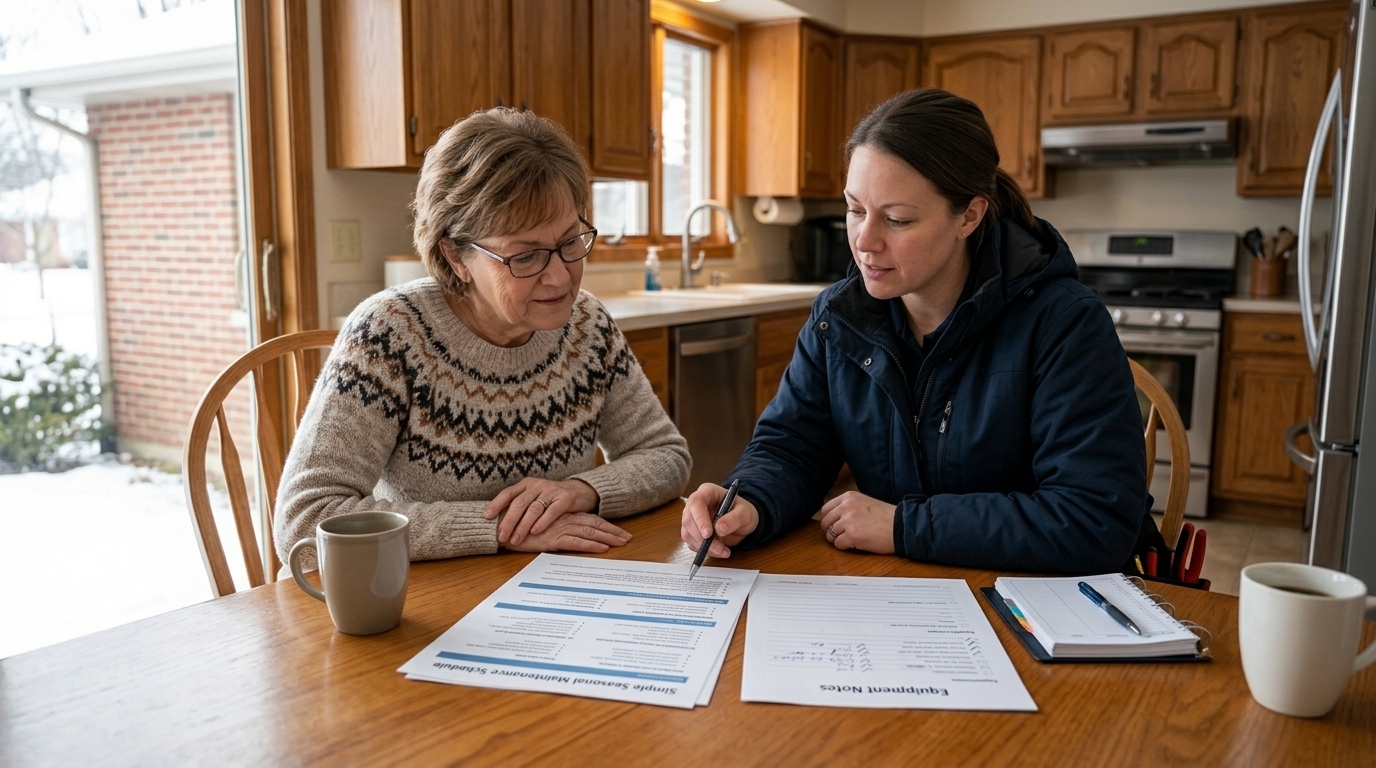
A practical homeowner routine can look like this:
Monthly or periodically: inspect filters and watch for unusual system behavior.
Spring: prepare cooling equipment and heat pumps.
Summer: monitor cooling performance and drainage.
Fall: prepare furnaces and heat pumps for winter.
Winter: monitor heating reliability and outdoor heat-pump airflow.
The exact frequency depends on equipment and household conditions, but consistency matters more than complexity.
Conclusion
For Saline homeowners, HVAC maintenance is one of the simplest ways to reduce uncertainty around year-round heating and cooling.
Useful homeowner tasks include:
- Checking filters
- Keeping registers clear
- Maintaining outdoor-unit clearance
- Monitoring thermostat operation
- Watching for leaks
- Listening for unusual sounds
Professional maintenance complements these tasks by evaluating mechanical, electrical, airflow, heating, cooling, and heat-pump components that homeowners cannot reasonably inspect themselves.
The goal is not to prevent every possible HVAC failure.
It is to identify developing problems earlier, maintain appropriate system operation, and create better information for future repair or replacement decisions.
In Michigan’s seasonal climate, that proactive approach can help Saline homeowners enter both summer and winter with greater confidence in their heating and cooling equipment.
Frequently Asked Questions
How often should Saline homeowners schedule HVAC maintenance?
Most residential HVAC systems benefit from professional maintenance at least once each year. Systems that provide both heating and cooling, such as heat pumps, may benefit from seasonal inspections before both summer and winter.
What HVAC maintenance can homeowners do themselves?
Homeowners can safely handle simple tasks such as:
- Inspecting and replacing filters
- Keeping supply registers open
- Keeping return grilles unobstructed
- Clearing debris around outdoor equipment
- Monitoring thermostat operation
- Watching for unusual noises or leaks
Technical repairs involving electrical, refrigerant, combustion, or internal mechanical components should be left to qualified professionals.
When should I call for HVAC repair in Saline?
Professional HVAC repair Saline MI is appropriate when the system develops persistent problems such as weak airflow, repeated cycling, unusual noises, water leakage, strong odors, or difficulty maintaining temperature.
What is the best time of year for HVAC maintenance in Saline?
Spring is a practical time to prepare cooling equipment, while fall is ideal for heating-system inspection. Pre-season service gives homeowners more time to address problems before peak summer or winter demand.
How often should HVAC filters be replaced?
There is no single replacement schedule for every home. Filter life depends on filter type, equipment runtime, pets, household occupancy, dust levels, and manufacturer recommendations. Regular inspection is more useful than relying on one universal interval.
Can dirty filters increase HVAC energy use?
Yes. A heavily loaded filter can restrict airflow, which may increase blower workload and cause the system to operate longer. Maintaining appropriate airflow supports normal heating and cooling performance.
Why are some rooms in my Saline home hotter or colder than others?
Uneven temperatures can result from duct leakage, airflow restrictions, poor balancing, insulation differences, window exposure, or HVAC equipment problems. Professional heating and cooling Saline MI evaluation can help identify the actual cause.
Do heat pumps need more maintenance than conventional AC systems?
Heat pumps may require more year-round attention because they provide both heating and cooling. A heat pump Saline MI system should be evaluated for both summer and winter operation.
Is frost on a heat pump normal in winter?
Some frost can be normal. Heat pumps periodically enter defrost mode to remove frost from the outdoor coil. Persistent heavy ice that does not clear appropriately should be professionally evaluated.
Can regular HVAC maintenance prevent all breakdowns?
No. Mechanical and electrical components can still fail unexpectedly. Maintenance reduces risk by giving technicians opportunities to identify developing problems before they become emergencies.
Should I replace older HVAC equipment just because of age?
Not necessarily. Age should be considered alongside repair frequency, reliability, energy consumption, comfort, safety, and major component condition. Older equipment that remains dependable may still have useful life remaining.
How do I choose a reliable HVAC contractor in Saline?
Look for appropriate licensing, insurance, local experience, heating and cooling expertise, heat-pump knowledge, diagnostic capability, written recommendations, maintenance options, and warranty support.